


Trainings
We offer innovative training to strengthen skills in the prevention and care of gender-based violence, promoting psychosocial well-being.
Trainings
We offer innovative training to strengthen skills in the prevention and care of gender-based violence, promoting psychosocial well-being.
How do we do it
We develop training and technical and psychosocial well-being strengthening programs, aimed at key stakeholders, both public and private, responsible for the comprehensive care of gender-based violence. We also provide training to women's organizations on four pillars: institutional, technical, psychosocial, and humanitarian.
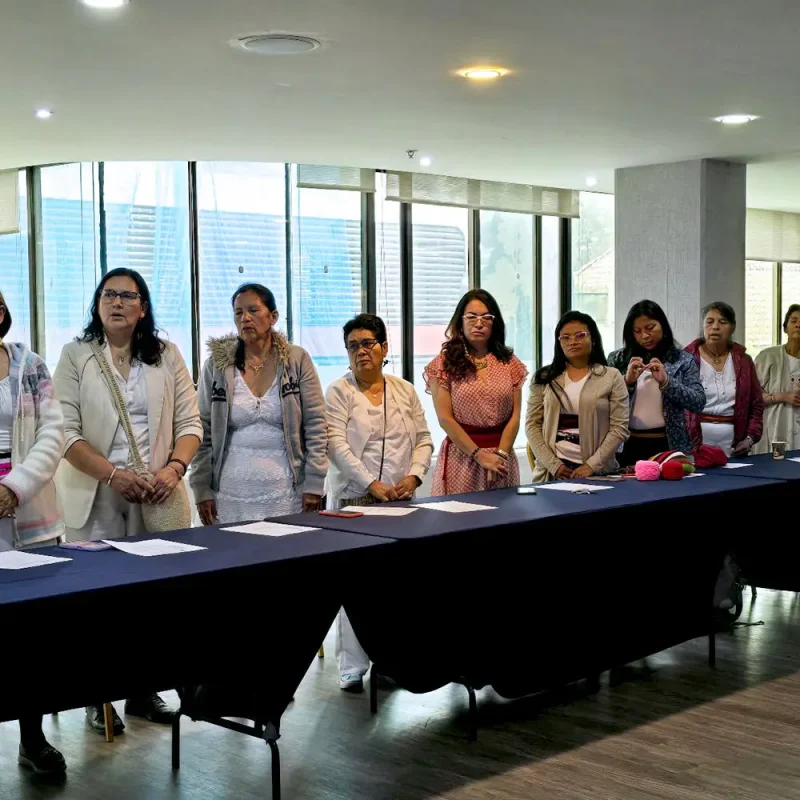
Gender-Based Violence Prevention Training
Within this axis, we develop innovative educational strategies, whether in-person or virtual, adapted to the specific characteristics of each company or entity. These strategies are aimed at engaging all employees in the prevention and comprehensive care of gender-based violence, as well as in self-care, mental health, and psychosocial well-being.
Additionally, we strengthen and update institutional and personnel capacities in sectors such as health, education, justice, and protection, in the application of national regulations for the prevention and response to gender-based violence, with a special focus on sexual violence.
GENFAMI It has worked to strengthen the responsiveness of sectors such as health, education, justice, and protection to attend to survivors of gender-based violence, especially sexual violence. It has developed training courses to implement the Comprehensive Model and Protocol for Health Care for victims of sexual violence, applying gender, differential, human rights, and psychosocial approaches, aimed at professionals responsible for this care.
GENFAMI offers a Certification Course in Comprehensive Health Care for Victims of Sexual Violence, aimed at healthcare professionals, to improve their skills in the comprehensive management of these cases. The course, available in person or virtually, complies with the regulations of Resolution 2003 of 2014, which requires healthcare institutions to have certified personnel and specific programs for the care of victims of sexual violence. During the training, technical aspects of comprehensive health, medico-legal sample collection, care pathways, use of post-exposure kits, and STD prevention are covered.
Numerous regulatory and jurisprudential frameworks in Colombia require intersectoral coordination to ensure comprehensive care for victims of gender-based violence. GENFAMI works to train the health, justice, protection, and education sectors, both public and private, to strengthen actions and build care pathways, with a special focus on sexual violence. This work has made it possible to identify obstacles in access to comprehensive care and formulate strategies adapted to the needs of victims and the particularities of each region of the country.
Through training sessions aimed at groups such as women, women leaders, survivors of gender-based violence, and adolescents, sexual and reproductive rights and gender equality are promoted. Some of the topics covered include:
- The ability of men and women to enjoy pleasurable sexual relations.
- Positive body image.
- The free and autonomous exercise of sexual orientation and gender identity.
- The promotion of sexual health and the prevention of sexually transmitted diseases.
- Reproductive self-determination.
- The right to a life free from violence and strategies for prevention and response.
- Capacity building process for prevention
of gender-based violence.
In capacity-building workshops for the prevention of gender-based violence, participants are empowered in their human rights and provided with tools to reframe their life stories. With a differential approach, training sessions are tailored to specific groups, such as adolescents and women in vulnerable situations (displaced, migrant, survivors of violence). Through reflection and awareness-raising, self-worth and sorority are fostered, promoting support networks and strengthening their ability to demand a life free from violence, regaining confidence, leadership, and overcoming conditions of exclusion.
GENFAMI has created a training course line to engage men in the fight against gender-based violence and all forms of violence. Using its own methodologies, it offers tools for reflection, self-care, and the promotion of mental and physical health. These trainings, aimed at older and younger men, question traditional norms of masculinity based on toughness and power, promoting new ways of being men and women, and a more democratic society with zero tolerance for gender-based violence.
How do we do it
We develop training and technical and psychosocial well-being strengthening programs, aimed at key stakeholders, both public and private, responsible for the comprehensive care of gender-based violence. We also provide training to women's organizations on four pillars: institutional, technical, psychosocial, and humanitarian.
Within this axis, we develop innovative educational strategies, whether in-person or virtual, adapted to the specific characteristics of each company or entity. These strategies are aimed at engaging all employees in the prevention and comprehensive care of gender-based violence, as well as in self-care, mental health, and psychosocial well-being.
Additionally, we strengthen and update institutional and personnel capacities in sectors such as health, education, justice, and protection, in the application of national regulations for the prevention and response to gender-based violence, with a special focus on sexual violence.
Training for Comprehensive Care
of gender-based violence, with an emphasis on sexual violence
Genfami has dedicated significant efforts to strengthening the response capacity of the health, education, justice, and protection sectors, in both the public and private spheres, for survivors of gender and sex-related violence, including sexual violence.
With this interest, the Foundation has developed a training process for the implementation of the Comprehensive Health Care Model and Protocol for Victims of Sexual Violence, and the application of gender, differential, human rights, and psychosocial approaches.
These training processes are aimed at professionals responsible for the comprehensive care of survivors of sexual violence, in accordance with the requirements, competencies, and mission of each institution and the health, education, protection, or justice sector to which they belong.
Certification course aimed at the healthcare sector
Genfami offers the Certification Course in Comprehensive Health Care for Victims of Sexual Violence, through which health sector professionals will be able to develop better skills and knowledge for the comprehensive approach and care of sexual violence. This course is offered in person or through virtual means.
Regarding the health sector, Resolution 2003 of 2014 establishes that as part of the habilitation process, healthcare provider institutions offering outpatient services, emergency care, or hospitalization must have a healthcare program for victims of sexual violence, an institutional team for the programmatic management of the model and protocol for comprehensive healthcare for these victims (Resolution 459/2012), and personnel certified in comprehensive care for victims of sexual violence.
Led by professionals expert in national technical and regulatory guidelines on the subject, and in the physical and psychological care of sexual violence cases, this certification course addresses technical issues related to integral health, medico-legal sample collection, and the activation of pathways for the comprehensive approach to survivors of sexual violence. Likewise, professionals' knowledge is strengthened on technical guidelines in cases of sexual violence, for the use of post-exposure kits and procedures such as, among others, voluntary termination of pregnancy and prevention of sexually transmitted infections (STIs).
Comprehensive care and intersectoral coordination
Numerous regulatory and jurisprudential instruments that have been produced in response to gender-based violence in the country demonstrate the need for inter-sectoral coordination, so that comprehensive victim care becomes a reality in the practice of public and private entities responsible for this care in the health, justice, protection, and education sectors.
In this way, as part of the work to promote comprehensive care for victims of gender-based violence in the country, Genfami develops, through various channels, training aimed at each of the different public and private sectors, to strengthen actions and build pathways that benefit victims of gender-based violence – including, with an emphasis on sexual violence – and empower the community in recognizing and demanding their rights.
This work has allowed Genfami to develop its capacity to identify the nodes that limit access to comprehensive care and, therefore, its capacity to formulate and implement strategies that respond to the needs and conditions of victims and to the particularities of municipalities, districts, and departments.
Sexual and reproductive health workshops
Through training processes aimed at specific groups – such as women, women leaders, survivors of gender-based violence, or adolescents, among others – work is carried out to promote sexual and reproductive rights and gender equality. Among other topics addressed, the following stand out:
- The ability of men and women to enjoy pleasurable sexual relations.
- Positive body image.
- The free and autonomous exercise of sexual orientation and gender identity.
- The promotion of sexual health and the prevention of sexually transmitted diseases.
- Reproductive self-determination.
- The right to a life free from violence and strategies for prevention and response.
- Capacity building process for prevention
- of gender-based violence
In a series of capacity-building workshops for the prevention of gender-based violence, participants are offered a process of empowerment in their human rights, as well as a set of tools aimed at reframing their life stories.
Thanks to a differentiated approach, this training process has different versions that respond to the topics, interests, and needs presented in the subject matter by specific groups to whom it is directed, such as, among others, adolescents and women, who in turn may be in situations of particular vulnerability: displaced, migrant, refugee, returned, survivors of gender-based violence in the context of conflict, among other causes of exclusion and discrimination.
Through reflective and awareness-raising exercises, participants strengthen their recognition of their own worth and that of other women. This also aims to consolidate bonds of sorority among them, in order to foster the creation of support networks and boost their individual and collective capacities to defend, promote, and demand their right to a life free from violence.
The process also addresses a series of conceptual elements, aimed at helping adolescents and women to reframe their life stories. Participants are encouraged to recover or strengthen their self-confidence, to recognize their strength and leadership in order to overcome conditions of vulnerability and inequality or exclusion.
Masculinities
In order to interest and involve more and more key actors in social transformation, Genfami has defined a series of training sessions aimed at promoting the active participation of men in actions and processes against gender-based violence and, in general, against all forms of violence.
With this perspective, the Foundation has developed its own methodologies that include tools for reflection, training, self-care, and the promotion of mental and physical health.
This process includes a set of pedagogical tools for working with older men and young people, problematizing sociocultural norms around masculinity managed through roughness, exploitation, concentration of power, and the subordination of women and the feminine, and to make way for new forms of constructing what it means to be a man, to be a woman, and for a more democratic society with zero tolerance for gender-based violence.